Here are some things that, in my opinion, do not get the accolades they deserve, being overlooked in favor of the louder, trendier, grander, prettier, easier, the more obvious, awesome, hot-topic things they coincide with. These are they that never seem to podium; these are the consistent runner-ups, the patted-on-the-back, the “how are you not married?!”s. These are they who are never considered quite the best option, but are certainly never the worst.
These are the honorable mentions.
Slide-On Shoes
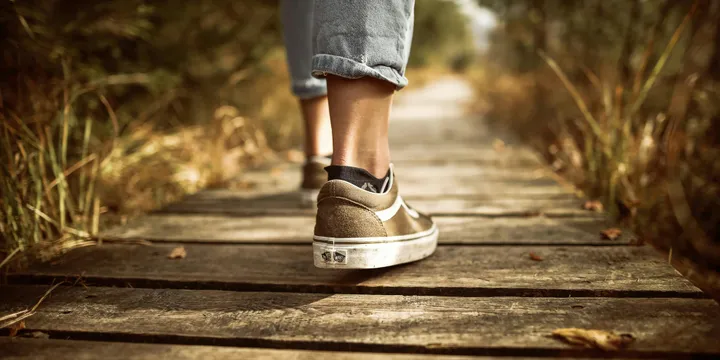
The slide-on shoes are perhaps not the “cutest” shoe available. But I dare anyone to say they’d rather spend full minutes lacing up their high-top Converse or using a crowbar to get their feet into their Air Force 1’s without creasing them, just to go get the mail or pick up their Rx from a drive-thru pharmacy.
No—when it comes to user-friendly footwear, the slide-on shoe is the unspoken hero.
I got mine not from a popular storefront or brand outlet, not from a DSW or Famous Footwear, but from Zurchers, the party store with the clown from your nightmares on its Welcome sign. They’re mostly plastic and foam, I think—nothing impressive, probably not “recycled”, they’re brown, they were $9.00. And they’ve lasted me almost ten years. The left one makes a wheezing noise every time I step, like it’s begging me to retire it to a landfill, but I will not. The right one has a tear in it right where the base meets the strap, so when I bend the shoe at all it gapes open and threatens to bisect the shoe entirely, but I will not let it. These are tried-and-true shoes. I once wore them hiking four miles through a river (because someone told me it was a short stretch and I wanted to keep my tennis shoes dry for the remainder of the hike; turned out, the river was the hike) and they served me valiantly.
These are resilient shoes, shoes you can rely on to get the job done but not make a fuss about it. These are the shoes that are always there for you, especially when you’re at your fashion-lowest. They are the late night phone call to the only person you’re sure you won’t be bothering. They’re the quality-time shoe. I believe there is good reason many people call these the “Jesus sandal”: slide on shoes suffereth long, and are kind. Slide on shoes envieth not; vaunteth not themselves, are not puffed up. They beareth all things, believeth all things, hopeth all things, endureth all things. Slide on shoes never faileth.
A Heated Seat in a Car
Leather or fake leather (faux leather? Pleather? I-can-believe-it’s-not leather?) upholstery is a clean and classic look for your car’s seating, and is particularly appreciated for not absorbing spills. However, come the winter months this material feels less “comfy” and more “arctic torture-y.” (Dante’s ninth circle of hell is a frozen lake. Mine is a frozen car.)
One Honda dealership tries to spin that for the better by saying “leather provides a great barrier against heat because it contains a large amount of air, making it a very poor conductor. Whereas cloth quickly absorbs heat from your body, leather […] will resist the warmth.” At this, I can only blink in bewilderment, especially since “resist the warmth” sounds like an adage from the devil. Maybe in the dead of summer that resistance to warmth is appealing, but from October to March those of us without garages or modern remote-turn-on vehicles sit in miserable iceboxes, praying to our Maker that the car’s hot air will quickly thaw the car and our frozen bodies.
Unless the car’s Maker has endowed it with the divine gift of heated seats.
A heated seat in a car is the answer to those many prayers from many commuters—like a stovetop burner for your butt, it is a means of relief in a time of distress. I feel I can use “distress” because I don’t know of another word that can describe the anger and discomfort and longing for deliverance one feels in a frozen car, quite so succinctly. The heated seat relaxes rigid muscles, says, “there, there,” while your shivers diminish, and reassures you that the cold never lasts forever, the misery will end, you’ll be just fine, and you’ll get where you need to go. The heated seat makes an otherwise dreaded or boring drive not only bearable, but enjoyable. It’s a safe space, a comfortable space. It’s a solace.
Free Pens
I know some individuals who insist on writing with a specific pen. Some just prefer a brand or type of ink. A few are adamant about the make and model. (In my experience, these are usually the same people who carry leatherbound journals and have lengthy opinions on why vinyls are music’s purest form.)
I personally like a good ballpoint that writes thick. BIC does that well, delivering striking lines of ink eager to smear. For some reason though, nothing quite tops the efficacy and writing experience of a free pen.
You find these pens on the ground, or snag one from an overflowing container on a secretary’s desk, or are given one in a promotional goody-bag. The ones that tell you “Payne Orthodontics | Orthodontics at Bridgetower’’ with a phone number and address. I have never been to Payne Orthodontics and cannot speak for the quality of their root canals, but gosh do I love their pens.
These pens make you want to write. If you’re not a writer, they make you want to doodle. They turn the self-conscious man into the man who scribbles his name 47 times on the margins of his handout in different fonts. They’re a conduit of self-expression, of brains with bright light bulbs illuminating usually dim corners. Black and blue do not suggest beatings and bruises, with a free pen—they promise bold images and articulations that cannot and need not be erased or replaced, a firmness of ideas that don’t require healing but nurturing.
The free pen is a tool of confidence, something that makes you sure of yourself. It empowers the holder and emboldens their individuality, personality, originality. It’s the friend that tells you to shoot your shot, submit the application, make the move, try.
If the pen is mightier than the sword, the free pen could take down a battalion.
Grape Juice
According to various food and beverage statistics sites, year after year apple and orange juice stand as reigning “favorites” over their freshly squeezed competitors. I get it; they are delicious. Both have that delightful sweetness-to-tartness ratio that people look for in their juice, plus a popularity at breakfasts that makes them an easy pick. Minute Maid and Motts chose a good fruit to market. Toddlers and diabetics everywhere are constantly carrying tiny cardboard boxes of the stuff, to boost low moods and low blood sugars. (I would know, I’m one of them. A diabetic, not a toddler.)
But why is everyone so drawn to the apple and orange juice? Why not the grape?! Nature’s candy turned liquid! Sweet and sharp and rich in a way neither apples nor oranges can compete with. When I peruse the juice shelves in Walmart my question is not “apple, orange, or grape?” but rather “grape or grape?” for there are multiple options!
Light yellowy-green or dark blackish-purple, each pairing well with different foods and moods. It’s versatile, a complementary drink. It is everyone’s companion, willing to meet and nourish anyone who will have them. A spirited, classic beverage. It refreshes, without overwhelming or intoxicating. The unfermented wine; a virtue before its being left ignored for very long makes it a bitter, potent vice.
I’ve been told that the wine back in Jesus’s time was more like grape juice. I bet He liked it. I bet it was His favorite.
The Human Ear
A few years ago I had a brilliant roommate studying Communication Disorders. She once had to give a presentation on the human ear to her classmates and asked me to be her practice audience. I played the part dutifully, nodding through the introduction full of science-y words I neither knew nor was particularly interested in.
But then she started describing how humans hear: how sound waves travel through the small canal in our ear to the eardrum, which vibrates according to the frequency of the wave. Then how the eardrum sends those vibrations on through to three microscopic bones shaped like Tinker Toys in the middle ear. And then these three tiny bones somehow translate or transmit or transmogrify those vibrations into mechanical energy, and amplify it, and send that energy swimming through the inner-ear-fluid, through a chamber that looks like an actual snail, where there are even tinier little hair-like sensors that feel the energy, and collect the data, and then send that data through the auditory nerve right to the gooey gray mass of your brain. Which then is somehow able to interpret the data as not only sounds, but sounds with meaning. And the brain attaches that meaning to those sound waves that hit your ear. And this whole process happens instantaneously.
I blame hormones and lack of sleep and the stress from my Critical Theories of Classical Literature class for my reaction to this information, but by the time Kenzie had reached the “gooey gray mass of your brain” part of her speech I was crying. Actually crying, with real tears tumbling over the real bags under my eyes. She froze and said “oh no, what happened,” and I took a shattering breath in and let out a sob before asking “can you please tell me how cochlear implants work?”
My other question that I didn’t voice was “why aren’t we talking about this all the time? This miracle! This wonder!” This deserves to be talked about! The ultimate meta-experience: creating soundwaves that will travel to the brain and be interpreted as words about how soundwaves travel to the brain. We should worship our ears and the God that made them, just for existing as they do! How admirably it completes such miniscule tasks, how useful and helpful to our day-to-day lives. The ear is not only (definitionally) the best listener we have, but it is also the means by which our attention might be called to other beautiful things that enrich our lives. They introduce us to people, places, things, they make sure we hear words of affirmation; these small appendages, doing what they can to make living more wonderful.
The Perforated Tear
Until the perforated tear, people relied on scissors, excessive folding, or luck to rip anything in a straight line. Scissors were a pretty sure bet, but anyone carrying around scissors with them day-to-day would be assumed a barber or serial killer. Excessive folding takes time, warps and frays the edges into soft, feeble fringe, and is still not a guarantee of misdirection when tearing. Luck is a crapshoot.
But the perforated tear… that strong, beautiful line, the discreet zzziiipp as you rip, the confidence and pleasure at clean-cut success, that is something to applaud. This is a quiet thing; part of its purpose is to be unassuming, to require little sound and little evidence for an act as aggressive as splitting something into separate pieces. But even with its humility, it provides such sweet satisfaction. It softens the blow of handing over your money when you’ve just torn the check smoothly from your checkbook. The annoyance of February 14th is overshadowed by the clean dividing of cardstock valentines prepared the day before. The most exhausting homework is turned in with greater confidence after it’s been gently tugged off its ream into a perfect 8.5x11 sheet.
You cannot mess it up unless you’re trying to. Everyone’s a winner!—the tear, the tearer, and the torn. Everything left fulfilled. The perforated tear is easy to please, leaving you with the feeling you get after a sharp high five. It is encouraging: you can do good things. You can do them right. You will make it proud, I promise.
The Rocking Chair
The chair is a staple commodity. Bless their inventor for creating an easy object that allows rest to weary bodies, and bless them for making it easily balanced and sturdily-backed. But chairs are impersonal; though they perform a needed function, they do so rather insipidly.
Where a chair may firmly direct and support like an army general, a rocking chair cares for its sitters. It rocks them like a parent might—the gentle sway that mimics the sensation of being carried. And oh, don’t we want to be carried. We want that assurance that someone is close and aware of us; we would love nothing more than the tender swing of being carried to stop our tears and tantrums. I turn elsewhere for the more obvious forms of validation and serotonin, like crappy reality TV and rants to my coworkers. And 32 oz soft drinks from Maverick. But had I a rocking chair…
Rocking chairs make me nostalgic for small hands and feet and board books. The rocking chair in my family’s nursery room had a thin wooden back full of tiny octagons I would try to push my little toddler fingers through. I can vaguely remember being rocked, my dad singing to me in Portuguese, whispering the parts of my face while brushing them quietly.
Eye, eye, nose, cheeks, chin.
I more vividly remember rocking my sister who was born when I was 13. I could recite “Goodnight Moon” to her by heart but followed along with the pictures anyway, though her baby eyes couldn’t see much, especially in the dark. And I’d whisper the parts of her face while brushing them quietly— eye, eye, nose, cheeks, chin.
These are memories of comfort and security, gentle swaying lulling me into slower heartbeats.
What other chair can do the same? Can pull you into a secure sense of calm, care for you when you need care, be a place of consolatory rest? What other chair gives as good a hug? I submit: none.
A few more:
- Peeling protective plastic sheets off new glass or screens— a physical depiction of the term “voila.”
- When a song ends right as you park your car— kismet.
- Wheat bread—wholesome, full of flavor, and better for all sandwiches except my mom’s peanut butter and honey.
- The Costco return policy—merciful, a wink and a nudge out the door, forgiving, accepting.
- Etc. – for being an abbreviation everyone uses without really getting to know its purpose.
To these honorable mentions and the so very many more, I give my applause and gold medals and blue ribbons. Though you feel overlooked, there are those who do notice what you offer: your consistency, aid, loyalty, encouragement, energy, compassion, pleasantness. You may not ever receive the awards you would like, but I hope the jobs you do will be reward in themselves.
You are good. I see it. Carry on.